The Revenue Impact of Product Page SEO
In the world of online retail, your product pages are your digital closers. While category pages might drive discovery, the product page is where the transaction happens. If these pages are invisible to search engines or misinterpreted by AI discovery platforms, your revenue suffers.
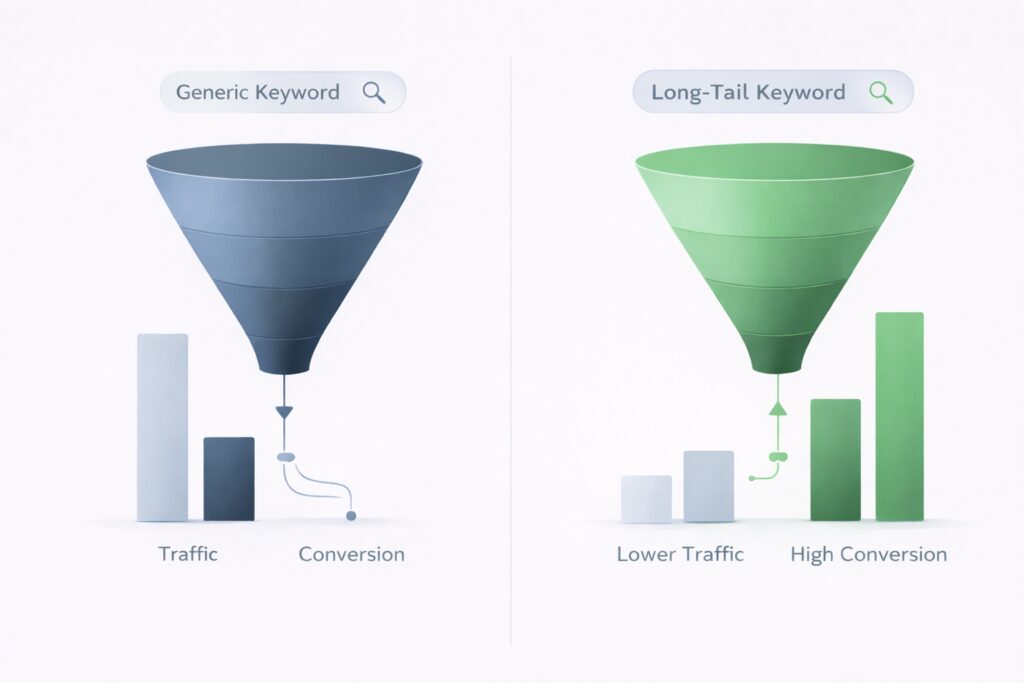
Many brands treat seo for ecommerce product pages as an afterthought, focusing only on the homepage. In our experience, this is a strategic error. A product page that ranks for a high-intent, long-tail query is often more valuable than a homepage ranking for a generic term.
How do you optimize an eCommerce product page for SEO and AI?
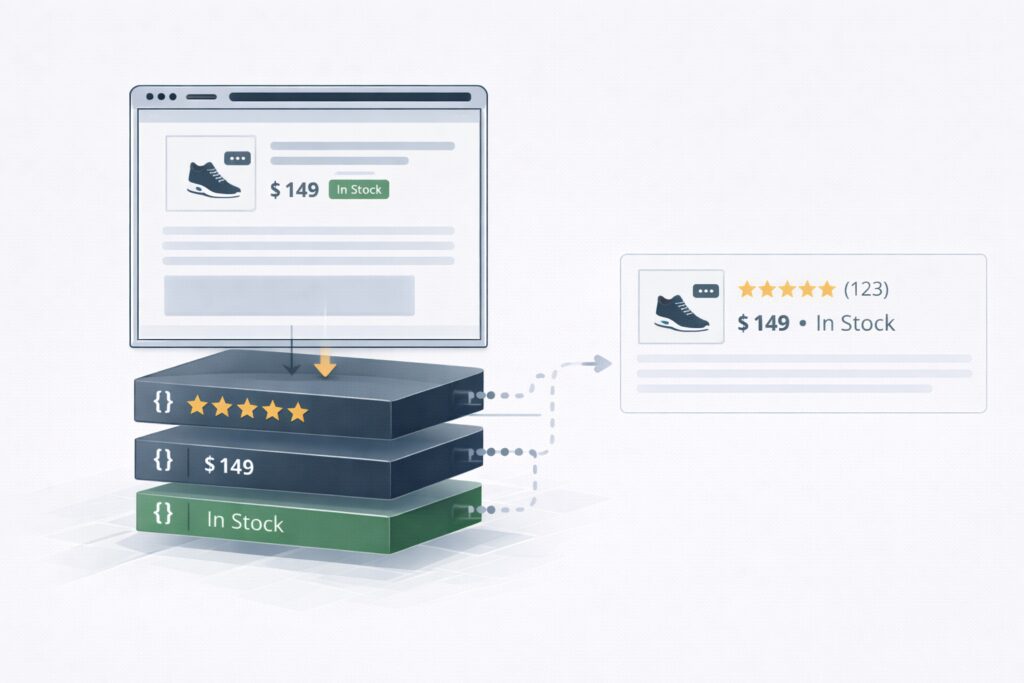
Effective seo for ecommerce product pages requires a balance of unique content and technical structure. You must provide a clear, descriptive H1 tag, high-quality images with descriptive alt text, and unique product descriptions that go beyond manufacturer specs. Crucially, you must implement JSON-LD structured data so that search engines and AI platforms can identify price, availability, and reviews accurately. This creates a citation-ready technical baseline that improves visibility across traditional and generative search.
Mistake 1: Relying on Thin or Duplicate Manufacturer Descriptions
One of the most frequent errors an ecommerce seo company identifies is the use of stock manufacturer descriptions. If you copy and paste the same description used by 50 other retailers, search engines have no reason to prioritize your page.
This creates “thin content” issues. To fix this, you must write bespoke descriptions that address your specific audience’s pain points. Unique content is a trust signal for both humans and AI engines. It proves that you are an authority on the product rather than just a reseller.
Mistake 2: Ignoring Technical Baseline and Site Speed
Performance is a core ranking factor. If your product page takes more than three seconds to load, your bounce rate will typically increase, signaling to search engines that the page is of low value.
A professional seo agency for ecommerce focuses on the technical baseline. This includes optimizing large product images, reducing server response times, and eliminating render-blocking scripts. A fast page is a high-converting page.
Mistake 3: Poorly Implemented Structured Data (Schema)
For a page to be “citation-ready” for AI platforms, it must use structured data. This is code that tells search engines exactly what the product is, how much it costs, and what customers think of it.
Without proper schema, you miss out on “rich snippets” like star ratings and price displays in search results. More importantly, AI answer engines may struggle to interpret your data accurately, leading to missed opportunities in generative search summaries.
Mistake 4: Keyword Cannibalization and Intent Mismatch
Sometimes, multiple product pages or a product page and a category page compete for the same keyword. This is known as keyword cannibalization. It confuses search engines and splits your “ranking power.”
An effective seo strategy for ecommerce website growth involves clear keyword mapping. Category pages should target broad terms, while product pages must target specific, long-tail queries that include model numbers, colors, or specific attributes.
Mistake 5: Neglecting Mobile-First Architecture
Most eCommerce traffic now originates from mobile devices. If your product page is difficult to navigate on a phone, you are losing money. This includes buttons that are too small to tap or images that do not scale correctly.
We aim to build and optimize pages that follow a mobile-first philosophy. This ensures that the user journey from discovery to checkout is seamless on any device.
Ownership Benefits That Fuel Long-Term Growth
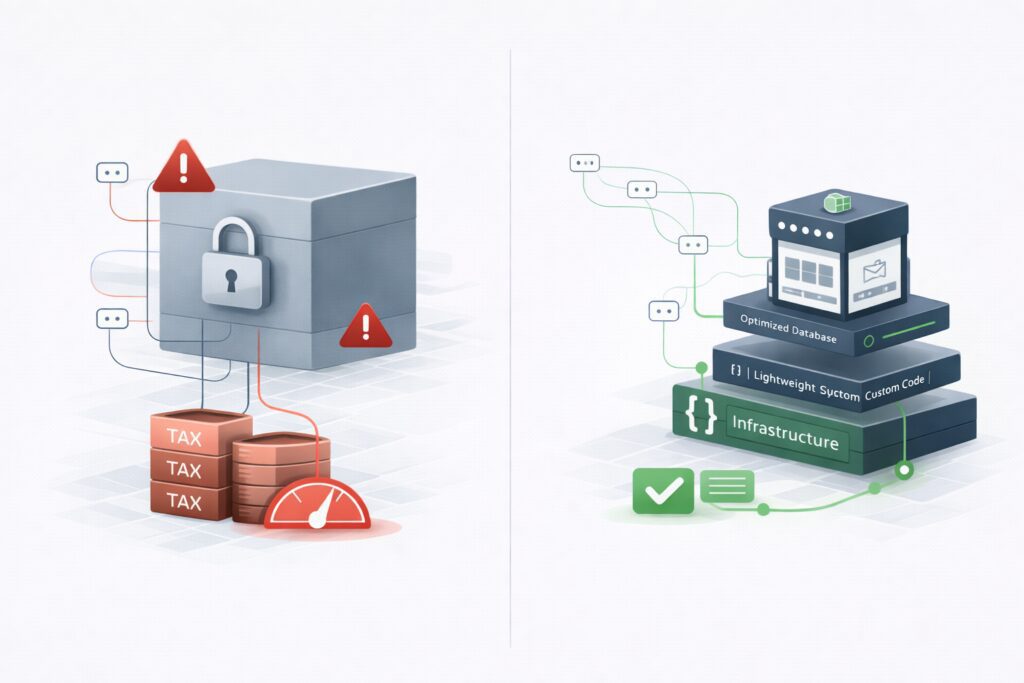
Scaling an eCommerce brand requires a foundation you actually own. When you move away from restrictive platforms and build a technical baseline designed for performance, you gain several advantages.
- Total Data Sovereignty: You own your customer data and site architecture without platform-imposed limitations.
- Custom Visibility Control: You can implement advanced SEO and AEO structures that “off-the-shelf” solutions cannot support.
- Zero Platform Taxes: Eliminating transaction fees allows you to reinvest more into the best ecommerce seo services.
- Scalable Performance: A bespoke infrastructure handles traffic spikes and large catalogs without degrading site speed.
Optimizing your product pages is a technical process that yields long-term compounding results. If your revenue pages are stagnant, it is time to audit your technical baseline and fix the errors that are holding you back.
Want us to find the hidden errors on your revenue pages? Request a Technical SEO Audit
Frequently Asked Questions for eCommerce Product Page SEO
In our experience, measurable changes in rankings and visibility typically occur within 3 to 6 months. This timeline depends on the technical state of your site, the level of competition in your niche, and the speed at which you implement the recommended technical fixes.
While basic optimization can be done internally, a professional company provides a deep technical audit that identifies hidden issues like crawl errors or improper schema. This level of expertise is typically required for brands looking to scale in competitive markets.
Yes. By creating a citation-ready technical baseline with structured data and unique content, you make it easier for AI platforms to interpret and recommend your products. We focus on readiness and clarity to improve your chances in generative search.
While many factors matter, the combination of unique content and properly implemented structured data is critical. These elements tell search engines both what the product is and why your specific page is the best source of information.
Typically, you should keep the page live but clearly mark the item as out-of-stock using structured data. This preserves the page’s ranking authority. You can also provide links to similar products to keep the user on your site.
AI can be a useful tool for generating drafts, but it requires human editing to ensure the voice is “human and specific.” For high-performance SEO, descriptions must address unique buyer questions that generic AI models might miss.