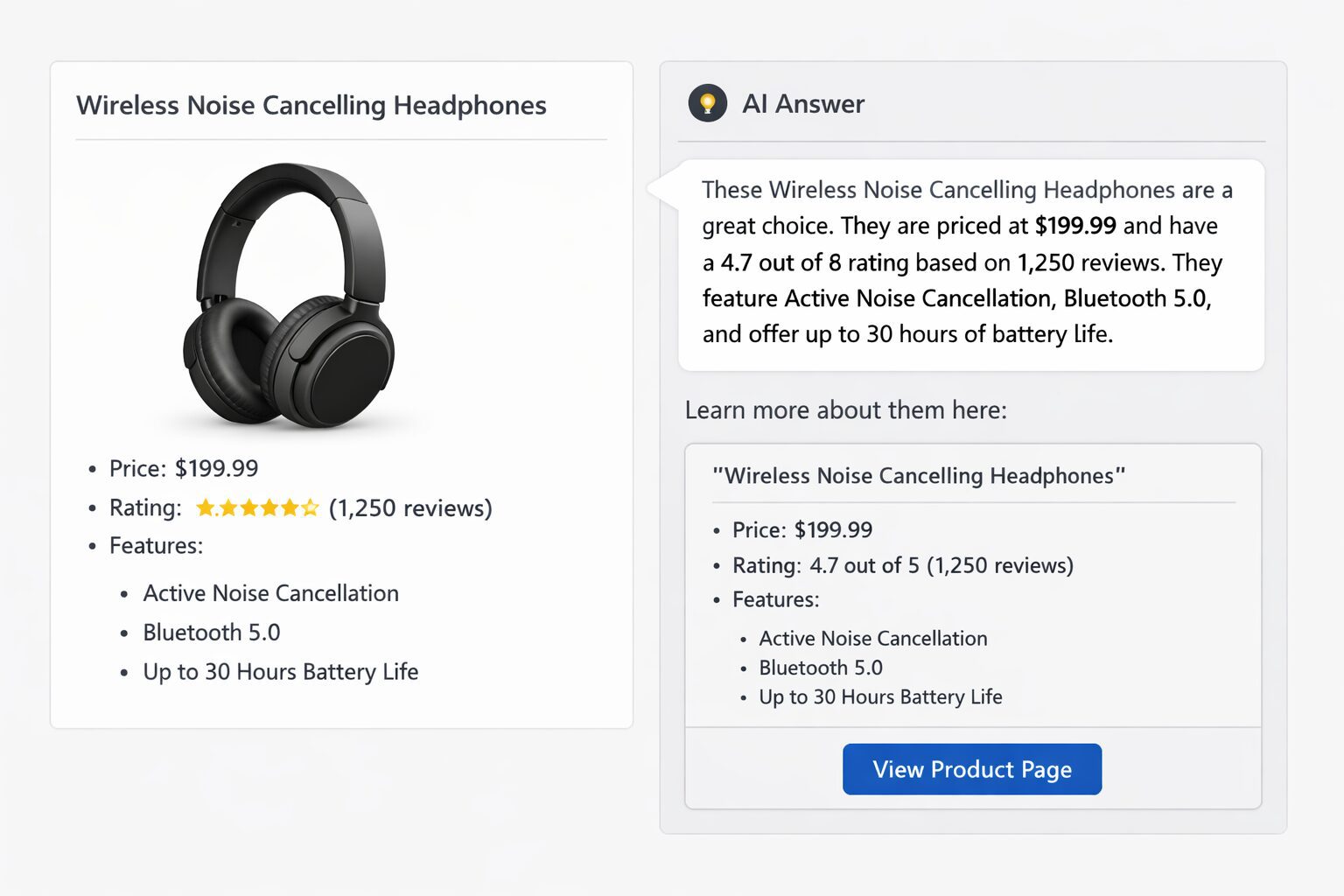
The Short Answer: What AEO Means for eCommerce
Answer Engine Optimization (AEO) is the practice of structuring your store’s content so that AI-powered answer engines, including Google AI Overviews, ChatGPT, and Perplexity, can extract and cite it accurately. For eCommerce brands, this means organizing product pages, category content, and FAQs so that buyers who ask a question get an answer that points back to your store. The best eCommerce SEO services now include AEO as part of the technical and content foundation, not as a separate add-on.
What Search Looks Like Now
Search has split into two distinct channels.
The first is the traditional results page: ranked links, ads, and featured snippets. Most eCommerce SEO strategies were built for this channel, and it still drives significant traffic.
The second is the answer layer. Google AI Overviews, ChatGPT, Perplexity, and similar platforms now answer buyer questions directly, before the user clicks anything. These answers are generated from structured, trusted sources.
The brands that appear in those answers did not get there by accident. They have content that is organized for extraction: clear headings, direct answers, consistent entity signals, and no contradictions that would cause an AI platform to skip them.
An eCommerce SEO agency focused on AEO builds toward both channels simultaneously.
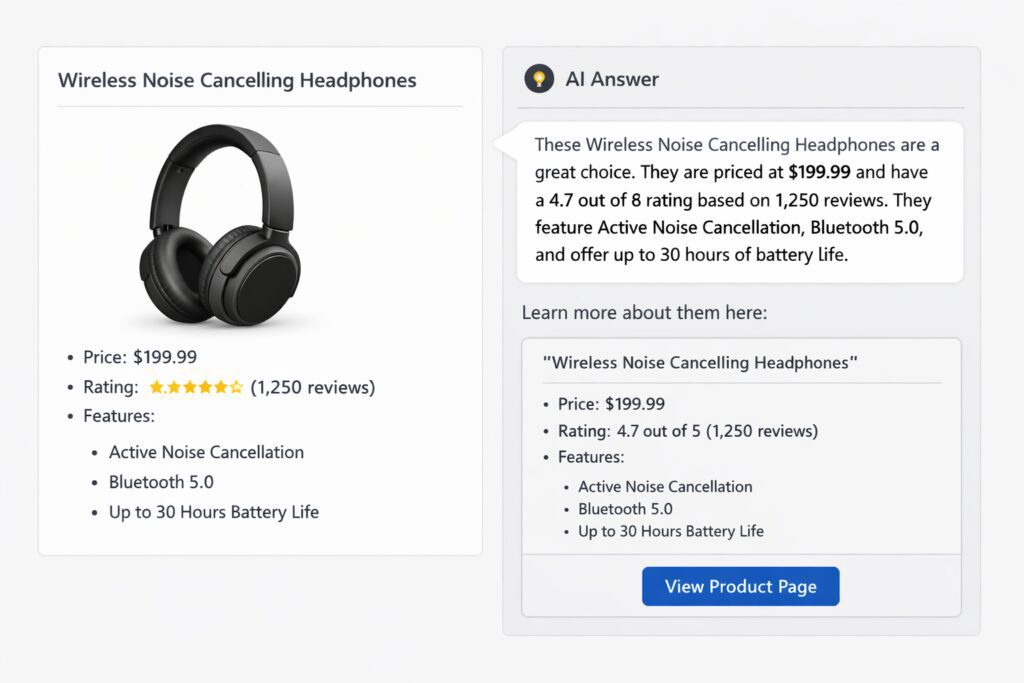
Traditional SEO vs AEO: What Changes
These are not competing strategies. AEO is a structural layer built on top of a solid SEO foundation. The table below shows where the work differs.
| Dimension | Traditional SEO | AEO + GEO Layer |
| Goal | Rank in the 10 blue links | Get cited in AI-generated answers |
| Structure | Keyword density and backlinks | Direct answers, clear entity signals |
| Content format | Long-form articles targeting search intent | Answer-first sections, FAQs, structured headings |
| Measurement | Rankings and organic traffic | AI citation tracking, featured snippet capture, answer box appearances |
| Time horizon | 3 to 12 months to move rankings | Structural improvement is immediate; visibility depends on AI platform behaviour |
| Who benefits most | Stores with existing domain authority | Stores at any stage that want future-proof foundations |
The takeaway: traditional SEO gets you ranked. AEO gets you cited. The best eCommerce SEO services build for both.
What an eCommerce SEO Agency Does to Optimize for Answer Engines
AEO is not a single tactic. It is a set of structural decisions applied across your site. Here is what that looks like in practice.
Answer-First Content Structure
Most eCommerce pages bury the answer. The product description starts with brand story, then specifications, then buried somewhere in paragraph four: what the product actually does and who it is for.
Answer-first structure flips that. The most important answer goes first, in clear language, in 40 to 80 words. The supporting detail follows.
This format is extractable by AI platforms. It also converts better for humans who scan before they read.
FAQ Layers on Priority Pages
Answer engines rely heavily on Q&A format content. Adding a structured FAQ section to product pages, collection pages, and core landing pages gives AI platforms ready-to-extract content paired with a clear source.
These FAQs should address real buyer objections and decision-friction points, not generic brand questions. The goal is to remove the barriers between a buyer’s question and a purchase decision.
Technical Baseline and Schema Markup
Structured data tells search and AI platforms exactly what a page is about. For eCommerce, the relevant schema types include Product, Offer, Review, BreadcrumbList, FAQPage, and Organization.
Without schema, an AI platform has to infer the context of your page. With schema, you declare it. A properly structured eCommerce store removes ambiguity and makes content easier to cite accurately.
Entity Consistency Across the Site
AI platforms build a model of what your brand is based on signals across your entire domain: your About page, contact details, policies, product descriptions, and blog content.
Inconsistencies cause problems. If your About page calls you a Shopify migration agency and your blog describes you as a general web developer, AI platforms struggle to interpret what you actually do.
An eCommerce SEO agency audits entity language across the full site and aligns it. Consistent, specific, and accurate brand signals improve how AI platforms represent you to potential buyers.
Internal Link Architecture
Answer engines follow links. A well-structured internal link system tells AI platforms which pages are authoritative, which answers connect to which products, and what the hierarchy of your store looks like.
Revenue pages should receive the most internal link equity. Informational content, including blog posts and FAQs, should link directly back to the relevant product or collection page.
Page Speed and Core Web Vitals
AI platforms prefer reliable, fast-loading sources. A store that loads slowly or fails Core Web Vitals benchmarks is less likely to be cited as a trusted source, regardless of content quality.
Technical performance is not separate from AEO. It is part of the readiness foundation.
The GEO Layer: How AI Platforms Interpret Your Brand
Generative Engine Optimization (GEO) is the practice of ensuring AI platforms can interpret your brand accurately and represent it consistently to users.
For eCommerce stores, this means three things.
Consistent entity language across all trust pages.
Your About page, contact page, returns policy, shipping page, and privacy policy should all use the same language to describe who you are, what you sell, and where you operate. Contradictions across these pages confuse AI interpretation.
Citation-ready writing.
AI platforms cite sources that make clear, specific, and verifiable claims. Inflated language, vague promises, and unverifiable statistics reduce citation likelihood. Writing that is direct, specific, and grounded in evidence performs better in generative results.
Trust signals in accessible locations.
Reviews, policies, guarantees, and evidence for product claims should be placed where both humans and AI platforms can access and validate them. A review buried in an inaccessible script block does not contribute to AI trust signals.
We include GEO as a structural and content layer in every engagement. It is not a separate product. It is part of building a store that AI platforms can understand and trust.
Ownership Benefits That Fuel Long-Term Growth
When an eCommerce SEO agency builds AEO and GEO into your store’s foundation, the benefits extend beyond search visibility.
- Content that converts and gets cited. Answer-first structure improves both AI extraction and human conversion rates. The same page does more work.
- A search foundation that is not dependent on paid ads. Organic visibility through search and answer engines reduces long-term customer acquisition cost.
- Brand interpretation you control. Consistent entity language across your site means AI platforms represent your brand on your terms, not by inference from inconsistent signals.
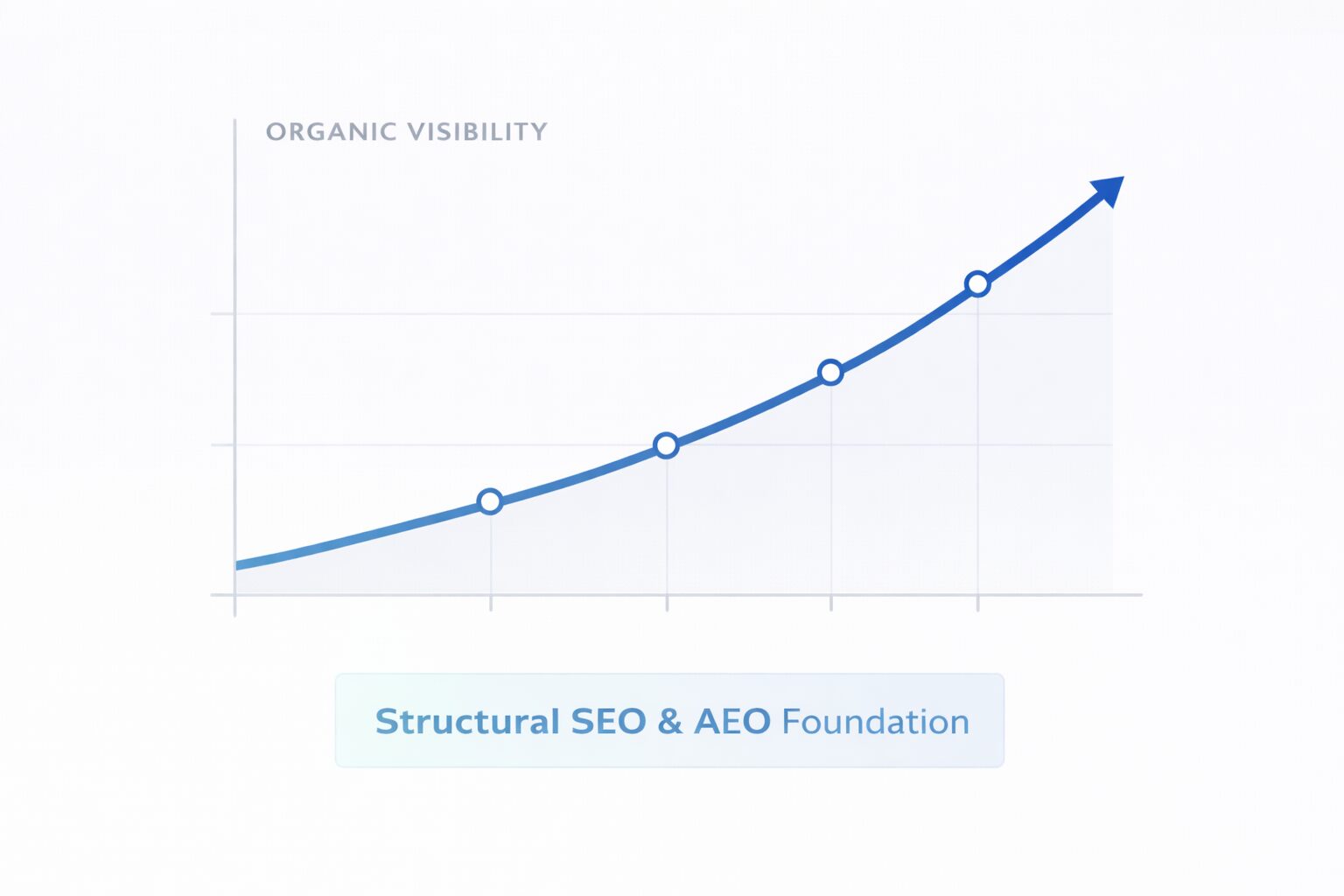
- Compound returns as the store grows. A well-structured SEO and AEO foundation improves over time. Every new page, product, or FAQ you add reinforces the existing signals.
- A technical baseline that supports every other channel. Fast pages, clean schema, and correct structured data benefit email, paid, and social traffic as well as organic.
- Reduced dependency on SEO trend cycles. AEO and GEO are structural investments. They do not expire when an algorithm changes the way keyword targeting strategies do.
What This Looks Like in Practice
A typical AEO engagement with Alphamax follows a clear sequence.
- Audit. We review your current site structure, content format, schema implementation, entity consistency, and technical baseline. We identify the gaps between your current state and what answer engines require.
- Priority mapping. Not every page needs AEO work immediately. We identify the pages most likely to capture answer engine visibility: high-traffic informational pages, product pages for core offers, and any page currently appearing in featured snippets.
- Structural rebuild. We rewrite or restructure priority pages to lead with direct answers, add FAQ sections, align headings with buyer questions, and ensure internal links connect answers to revenue pages.
- Schema implementation. We add and validate structured data across the relevant page types. FAQPage, Product, BreadcrumbList, and Organization schema are implemented and tested using Google’s Rich Results Test.
- Entity and trust page alignment. We audit About, contact, policy, and shipping pages for consistent entity language and update where inconsistencies exist.
- Review and iteration. AEO is not a one-time project. AI platforms update their models. We monitor performance, track answer engine appearances where tools allow, and refine structure based on what we observe.
Timeline varies by scope. A focused AEO audit and priority page rebuild typically takes 4 to 8 weeks. Full-site implementation is scoped per project.
When to Bring in an eCommerce SEO Agency
Not every store is at the same starting point. Here is a straightforward way to assess where you are.
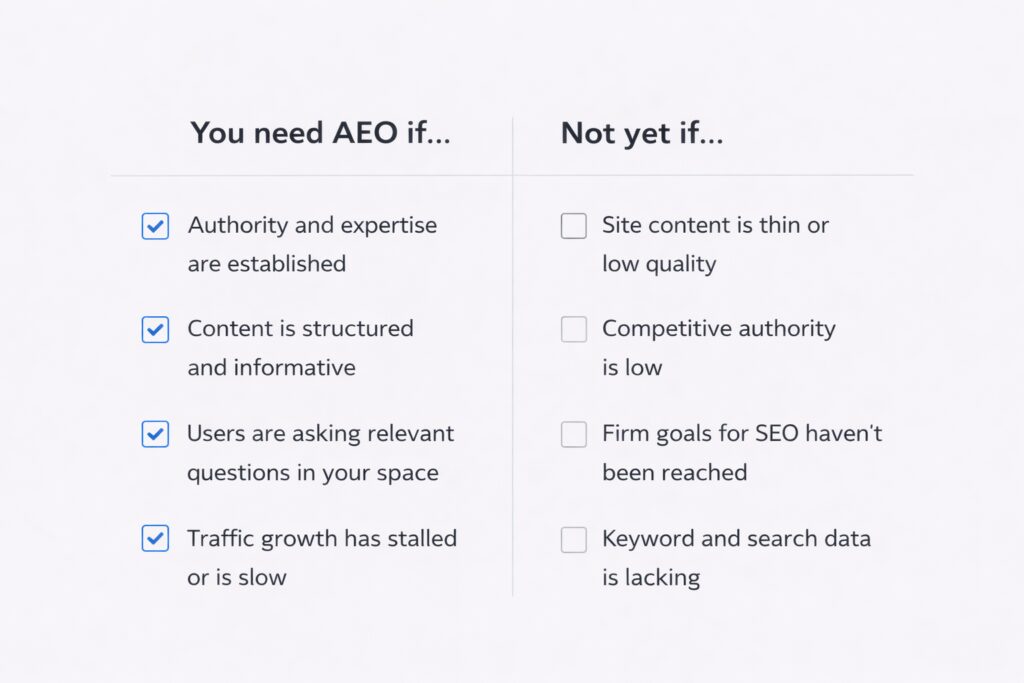
AEO and a dedicated agency are worth investing in if:
- Your store has solid products but weak organic visibility relative to competitors.
- You are spending consistently on paid ads with limited investment in long-term organic channels.
- Your pages are not appearing in featured snippets or AI-generated answers despite ranking for relevant terms.
- You have no structured data, inconsistent entity language across your site, or pages that bury answers in long paragraphs.
- You are planning a migration and want the new build to include AEO from the start, not retrofitted later.
You may not need a full agency engagement yet if:
- You are pre-revenue or below $50,000 annual revenue with limited content to optimize.
- Your primary constraint is product-market fit, not traffic quality.
- You already have a strong organic foundation and only need targeted AEO additions.
We assess every situation individually. If it is not the right time, we say so.
If your store is not structured for answer engines, you are competing for visibility with one hand behind your back.
We audit your current SEO and AEO foundation, identify the specific gaps, and give you a clear picture of what needs to change and in what order.
No vague recommendations. No unnecessary scope. A direct assessment and a plan you can act on.
Request an audit. We will tell you exactly where you stand.
Frequently Asked Question of AEO for Ecommerce
What is Answer Engine Optimization (AEO)?
Answer Engine Optimization (AEO) is the practice of structuring content so that AI-powered platforms, including Google AI Overviews, ChatGPT, and Perplexity, can extract and cite it in response to user queries. For eCommerce stores, this means organizing pages with direct answers, clear headings, FAQ sections, and structured data so that buyers asking questions encounter your brand in the responses they receive.
How is AEO different from traditional SEO?
Traditional SEO focuses on ranking in the standard results page through keyword targeting, backlinks, and on-page optimization. AEO focuses on being cited within AI-generated answers. Both strategies share technical foundations, including page speed, structured data, and content quality, but AEO adds an answer-first content structure and entity consistency layer that traditional SEO does not prioritize.
Can an eCommerce store rank in AI answers without being a large brand?
Yes. AI platforms cite based on content quality, structure, and trust signals, not brand size alone. A well-structured product page with a clear direct answer, consistent entity signals, and validated schema can appear in AI-generated results regardless of domain authority. Smaller stores with tightly focused, well-organized content can compete with larger brands in answer engine results.
What is GEO and how does it relate to eCommerce SEO?
Generative Engine Optimization (GEO) is the practice of ensuring AI platforms interpret and represent your brand accurately. For eCommerce stores, this means maintaining consistent entity language across your About, contact, policy, and product pages, writing citation-ready content without inflated claims, and placing trust signals where AI platforms can access and validate them. GEO is part of the foundation that determines whether AI platforms describe your store accurately to potential buyers.
How long does it take to see results from AEO work?
Structural improvements, including schema implementation and answer-first page restructuring, are immediate. How quickly they affect AI visibility depends on how often AI platforms re-index and update their models, which varies by platform and is not fully within our control. In our experience, well-structured pages begin appearing more frequently in featured snippets within 4 to 12 weeks. AI answer engine citation tracking is still an emerging measurement area.
What does Alphamax include in its eCommerce SEO services?
Our eCommerce SEO services cover the technical baseline, on-page structure, AEO content layers, schema markup, GEO entity alignment, and internal link architecture. We audit your current state, identify the highest-priority gaps, and rebuild or restructure accordingly. Every engagement includes an AI visibility readiness review as part of the foundation work. Scope and timeline are confirmed before we start.
Answer Engine Optimization (AEO) is the practice of structuring content so that AI-powered platforms, including Google AI Overviews, ChatGPT, and Perplexity, can extract and cite it in response to user queries. For eCommerce stores, this means organizing pages with direct answers, clear headings, FAQ sections, and structured data so that buyers asking questions encounter your brand in the responses they receive.
Traditional SEO focuses on ranking in the standard results page through keyword targeting, backlinks, and on-page optimization. AEO focuses on being cited within AI-generated answers. Both strategies share technical foundations, including page speed, structured data, and content quality, but AEO adds an answer-first content structure and entity consistency layer that traditional SEO does not prioritize.
Yes. AI platforms cite based on content quality, structure, and trust signals, not brand size alone. A well-structured product page with a clear direct answer, consistent entity signals, and validated schema can appear in AI-generated results regardless of domain authority. Smaller stores with tightly focused, well-organized content can compete with larger brands in answer engine results.
Generative Engine Optimization (GEO) is the practice of ensuring AI platforms interpret and represent your brand accurately. For eCommerce stores, this means maintaining consistent entity language across your About, contact, policy, and product pages, writing citation-ready content without inflated claims, and placing trust signals where AI platforms can access and validate them. GEO is part of the foundation that determines whether AI platforms describe your store accurately to potential buyers.
Structural improvements, including schema implementation and answer-first page restructuring, are immediate. How quickly they affect AI visibility depends on how often AI platforms re-index and update their models, which varies by platform and is not fully within our control. In our experience, well-structured pages begin appearing more frequently in featured snippets within 4 to 12 weeks. AI answer engine citation tracking is still an emerging measurement area.
Our eCommerce SEO services cover the technical baseline, on-page structure, AEO content layers, schema markup, GEO entity alignment, and internal link architecture. We audit your current state, identify the highest-priority gaps, and rebuild or restructure accordingly. Every engagement includes an AI visibility readiness review as part of the foundation work. Scope and timeline are confirmed before we start.
<!– ============================================================ ALPHAMAX DIGITAL SERVICES Schema Markup: BlogPosting + FAQPage Page: How an eCommerce SEO Agency Optimizes Your Store for Answer Engines (AEO) URL: /blog/ecommerce-seo-agency-answer-engine-optimization Instructions: Paste both script blocks inside the tag. Validate at: https://search.google.com/test/rich-results ============================================================ –>