Pricing is the question most agencies dodge. You fill out a contact form, wait two days, and get a discovery call instead of a number.
This post gives you the numbers.
eCommerce web design in the UK ranges from under £1,000 to over £50,000. That range is not vague: it reflects genuinely different scopes, platforms, and levels of build quality. What you pay should match what your business actually needs, not what a sales process leads you towards.
This guide breaks down the cost ranges, explains what drives price differences, and tells you what to watch out for at each tier.
Quick Answer: How Much Does eCommerce Web Design Cost in the UK?
eCommerce web design in the UK typically ranges from £800 to £50,000+, depending on platform, scope, and build type. Template-based builds on hosted platforms start around £800 to £3,000. Mid-range custom builds with WooCommerce or Shopify sit between £5,000 and £15,000. Fully bespoke eCommerce stores with custom functionality, SEO foundations, and performance optimisation typically start from £15,000. Ongoing maintenance and SEO retainers are separate costs.
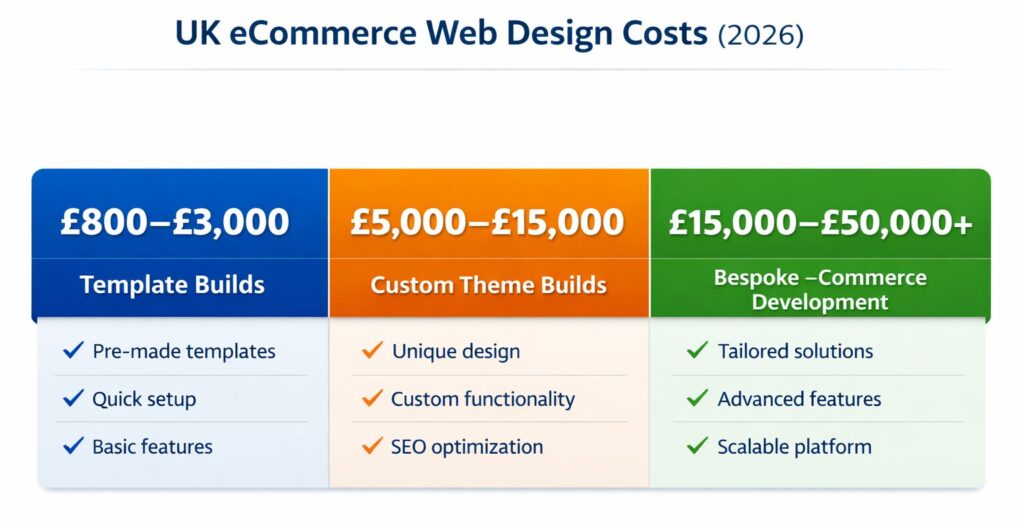
The Three Tiers of eCommerce Web Design in the UK
Tier 1: Template builds (£800 to £3,000)
Template builds use pre-designed themes on platforms like Shopify or WooCommerce. The agency installs the theme, populates it with your products, configures payment and shipping settings, and delivers a functional store.
What you get:
- A working store based on a pre-built design
- Basic configuration and product upload
- Limited customisation (colours, logo, fonts within theme constraints)
- Faster turnaround, typically two to four weeks
What you do not get:
- Custom UX or checkout flow design
- Technical SEO foundations built in
- Performance-optimised code
- A store built around your specific product journey
This tier suits stores just starting out with a small catalog, limited budget, and a need to validate the business before investing more.
Tier 2: Mid-range custom builds (£5,000 to £15,000)
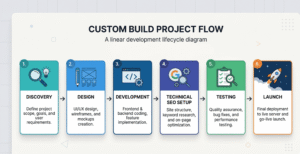
At this level, the build is based on a custom or heavily modified theme with a more structured discovery and design phase. The agency maps your product hierarchy, designs key page templates, and configures the platform to match your specific requirements.
What you get:
- Custom design for homepage, category, and product pages
- A defined site architecture and URL structure
- Basic on-page SEO configuration (meta tags, schema, sitemaps)
- Mobile-first responsive layout
- Integration of payment gateways, shipping providers, and analytics
What you do not get:
- Fully bespoke functionality
- Deep technical SEO work on faceted navigation or crawl budget
- Custom checkout logic or multi-step purchase flows
- Performance optimisation beyond standard theme setup
This tier suits established stores moving off a poor-performing setup, brands launching with a clear product range, and businesses that need a professionally built store without enterprise-level scope.
Tier 3: Bespoke eCommerce builds (£15,000 to £50,000+)
A bespoke build starts from scratch. The design, the architecture, the checkout flow, and the technical configuration are all built specifically for your business, your catalog structure, and your conversion goals.
What you get:
- Custom design across all page types
- Planned site architecture for SEO and scalability
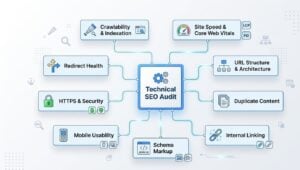
- Technical SEO implementation including schema, canonical tags, crawl configuration, and Core Web Vitals optimisation
- Custom checkout flow with reduced friction
- Performance-first build (lightweight code, image optimisation, CDN configuration)
- Integration with ERP, inventory, or fulfilment systems where required
This tier suits businesses turning over meaningful revenue online, brands migrating from a platform that is costing them in fees or limiting their growth, and stores that treat their website as a primary sales asset rather than a digital brochure.
What Drives the Cost Up
Several factors consistently push eCommerce web design costs higher:
Catalog size. A store with 50 products is simpler to build than one with 5,000. Larger catalogs require more considered URL architecture, faceted navigation handling, and bulk upload configuration.
Custom functionality. Subscription models, configurable products, multi-currency, wholesale pricing tiers, and custom checkout steps all require development work that extends the timeline and cost.
Design complexity. A store with multiple page templates, custom interaction patterns, and bespoke brand direction requires more design and front-end development time than a template adaptation.
Platform migration. If the build includes migrating an existing store from one platform to another, the scope includes data export, URL redirect mapping, SEO preservation work, and post-launch monitoring. That adds time and therefore cost.
SEO scope. A build that includes a full technical SEO setup, keyword-mapped architecture, and on-page optimisation across key pages costs more than one that delivers a visually designed store with basic meta tags.
Integration requirements. Connecting to accounting software, third-party logistics providers, CRM systems, or custom inventory tools adds complexity and development time.
What Drives the Cost Down (And the Risks That Come With It)
Lower quotes are not always bad value. But it is worth understanding what is typically removed to hit a lower number.
Pre-built themes with minimal modification. Fast and low-cost. The risk is a store that looks like thousands of others, performs inconsistently on mobile, and creates technical debt when you want to customise later.
No SEO work included. Many lower-cost builds deliver a functional store with no technical SEO configuration. The site works but is not set up to rank. You discover this six months later when organic traffic has not moved.
Offshore development at very low day rates. Not universally a problem, but communication overhead, revision cycles, and quality control can make the real cost higher than the quoted price suggests.
Scope reduction without flagging it. A low quote sometimes means key deliverables (redirect mapping, schema setup, performance optimisation) have been quietly removed from scope. Read the proposal carefully.
The question is not “what is the cheapest option?” It is “what is the minimum build that will not need to be rebuilt in 18 months?”
Platform Choice and How It Affects Total Cost
Platform choice affects both the upfront build cost and the ongoing cost of running your store.
Shopify
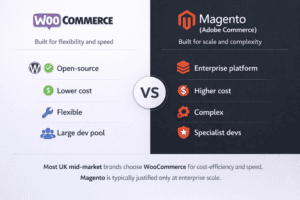
Build costs on Shopify tend to be lower upfront because the platform handles hosting, security, and core functionality out of the box. However, Shopify charges transaction fees on every order (unless you use Shopify Payments), monthly subscription fees that scale with your plan, and app fees for functionality that WooCommerce handles with plugins or custom code.
For a store turning over £500,000 per year, the annual cost of Shopify fees can be significant (verify against your own plan and transaction volume).
WooCommerce
WooCommerce builds typically cost more upfront because the platform requires more configuration: hosting, SSL, performance optimisation, and plugin setup all need to be handled. But there are no transaction fees, no platform subscription, and no restrictions on functionality.
For stores at meaningful revenue levels, the total cost of ownership over two to three years often favours WooCommerce despite the higher build cost.
Custom builds
Fully bespoke builds outside of a CMS framework are at the top of the cost range and suit businesses with very specific requirements that no platform meets out of the box. These are the exception rather than the norm for most eCommerce brands.
Hidden Costs Most Quotes Leave Out
A quoted price for web design does not always include everything you need to launch and run a store. Watch for these items being excluded:
- Hosting and domain. Some agencies quote build-only and exclude ongoing hosting costs. Managed WooCommerce hosting typically costs £50 to £200 per month depending on traffic volume.
- SSL certificate. Usually included with managed hosting but worth confirming.
- Stock photography or custom photography. Product photography and lifestyle images are rarely included in a web design quote.
- Copywriting. Category page copy, product descriptions, and homepage content are often out of scope unless explicitly included.
- Payment gateway setup fees. Stripe and PayPal are free to configure, but some payment providers charge setup or monthly fees.
- Post-launch support. Ask whether the quote includes a support period after launch and what is covered.
- SEO retainer. The build sets the foundation. Ongoing SEO, content, and link building are separate ongoing costs. Typically £500 to £2,500 per month for eCommerce SEO depending on scope and market.
A clear proposal should itemise what is and is not included. If it does not, ask before you sign.
What a Properly Scoped eCommerce Build Should Include
Regardless of budget tier, a build proposal should clearly state:
- Platform and hosting setup
- Number of page templates designed (homepage, category, product, cart, checkout, about, contact)
- Site architecture and URL structure plan
- On-page SEO configuration (meta tags, schema, sitemap, robots.txt)
- Mobile-first responsive design
- Payment gateway and shipping configuration
- Analytics and Search Console setup
- Redirect mapping if migrating from an existing store
- Post-launch testing and bug fix period
- Handover documentation
If any of these are missing from a proposal and the scope warrants them, they should be raised before signing.

Ownership Benefits That Fuel Long-Term Growth
A well-built eCommerce store is not just a cost. It is an asset that compounds over time. Here is what the right build delivers beyond launch:
- No platform fees eating into margin. An owned WooCommerce store has no transaction fees and no subscription that scales with your revenue.
- SEO foundations that work from day one. Technical configuration done at build time means organic rankings build on a solid base rather than fighting structural issues.
- A checkout built to convert. A properly designed checkout flow reduces abandonment and improves revenue per visitor from the moment the store goes live.
- Performance that holds as the catalog grows. A performant build with clean architecture handles catalog growth without degrading speed or crawlability.
- Full control over your roadmap. No waiting for a platform to release a feature. No app dependencies. No restrictions on what you can build next.
The upfront investment in a proper build is typically recovered faster than most store owners expect when the alternative is ongoing platform fees, patch costs, and a store that underperforms on SEO.
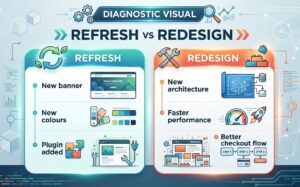
If you are evaluating eCommerce web design costs for a new build, a redesign, or a platform migration, the clearest next step is a scoping conversation.
Alphamax Digital builds bespoke eCommerce stores on WooCommerce with technical SEO foundations built in from the start. We can give you a clear scope and cost breakdown based on your specific requirements, not a generic price list.
Book a call to discuss your build. Book a Call with Alphamax