Your best-selling product feels like proof that you’re doing something right.
It gets the most traffic.
It converts better than everything else.
It’s the product you rely on when sales dip.
But here’s the uncomfortable truth most ecommerce brands don’t realize until they hit a plateau:
Your best-selling product might be the reason your revenue isn’t growing.
Not because the product is bad.
But because of how everything else in your store is structured around it.
The Illusion of Success
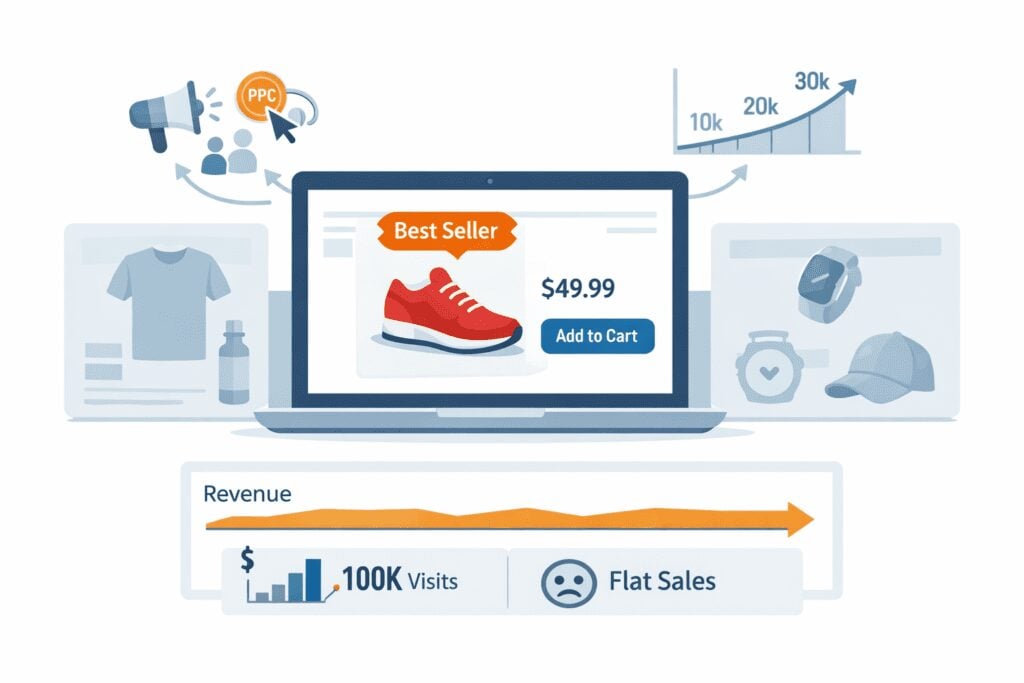
Best-sellers create a dangerous illusion. Sales keep coming in, so it feels like growth is happening. In reality, what’s happening is repetition, not expansion.
Customers come in for that one product, buy it, and leave.
They don’t explore.
They don’t upgrade.
They don’t add anything else to the cart.
Your store becomes a single-product transaction machine instead of a revenue-maximizing system.
And the worst part? High conversion rates hide the problem. When something sells easily, most store owners stop questioning it.
The Real Problem: Single-Product Dependency
When a best-seller carries most of your revenue, your entire business becomes fragile.
If ad costs rise, margins shrink.
If competitors copy the product, differentiation disappears.
If demand drops, revenue collapses.
But even before any of that happens, another issue quietly eats away at growth:
Average Order Value stays flat.
You keep pushing more traffic to the same product instead of extracting more value from each customer. More ads, more spend, same cart value.
That’s not scaling. That’s running faster on the same treadmill.
How Best-Sellers Quietly Kill AOV
Here’s what usually happens.
Your best-seller is priced competitively. It’s easy to say yes to. That’s why it converts.
But there’s no natural next step.
No bundle.
No upgrade.
No logical add-on.
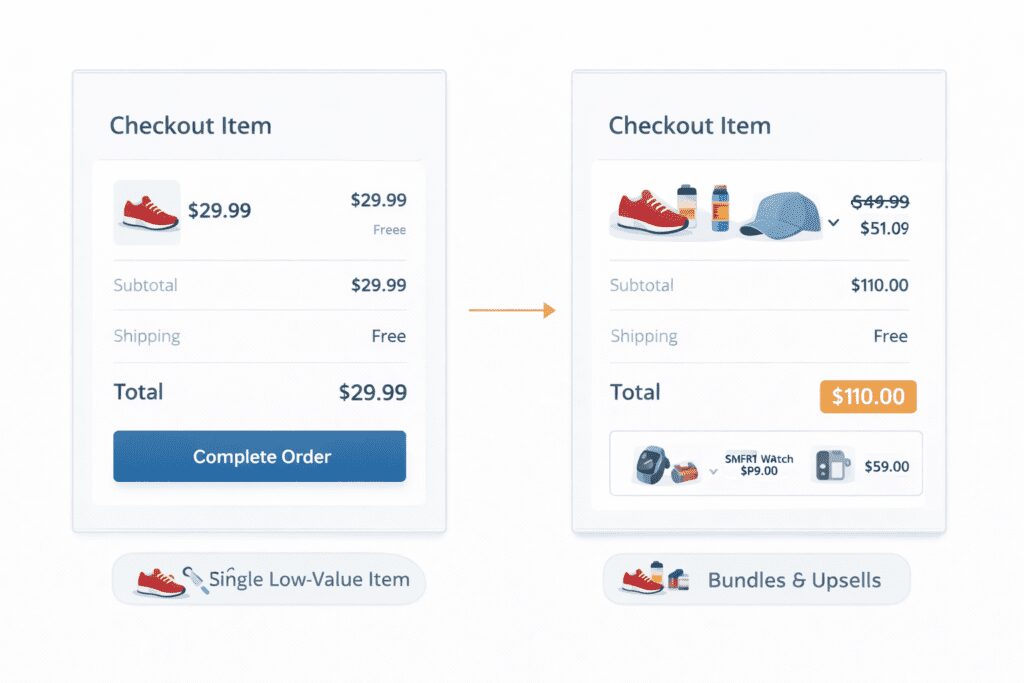
So customers do exactly what your store allows them to do: buy one thing and check out.
Every single order looks fine on its own. But across hundreds or thousands of orders, you’re leaving serious money on the table.
How Smart Brands Use Best-Sellers Differently
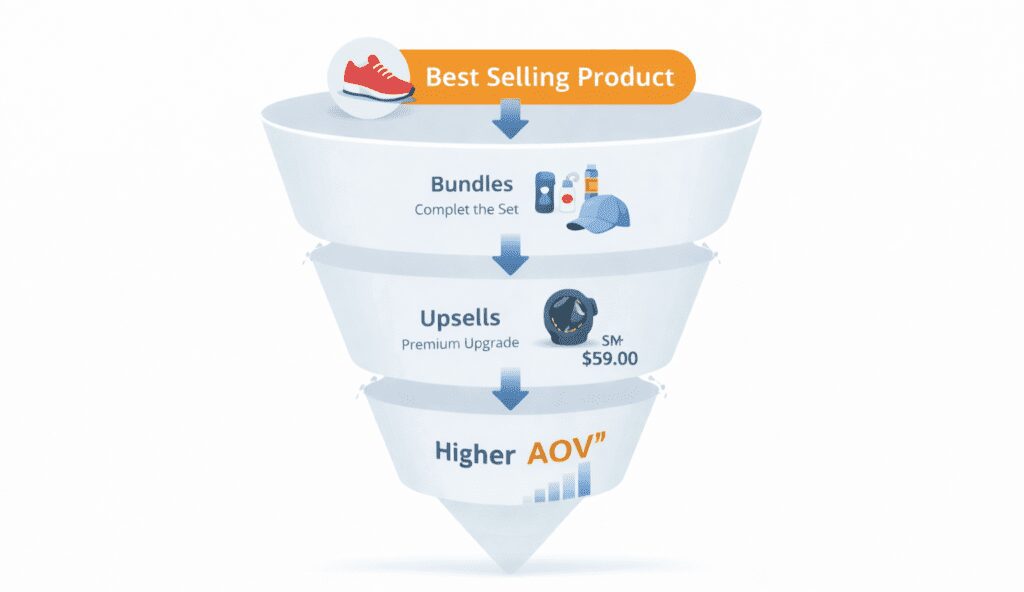
High-growth brands don’t treat best-sellers as the finish line. They treat them as entry points.
The best-seller pulls the customer in.
The system around it increases the cart value.
They do this by building intent-based paths, not cluttered stores.
Common examples:
- Bundling the best-seller with a complementary product
- Offering a “complete the set” option
- Creating a premium version or higher-margin upgrade
- Adding post-purchase upsells that feel natural, not pushy
The key is simple:
One decision leads to the next.
The customer doesn’t feel sold to. They feel guided.
What You Can Fix This Week
You don’t need a redesign or more traffic to fix this.
Start here:
- Identify your top best-selling product
- Ask: what logically makes sense with this product?
- Create one bundle or upgrade, not five
- Add one post-purchase upsell that complements the original purchase
That’s it.
No pop-up chaos. No discount addiction. Just structure.
Final Thought
Your best-selling product isn’t the problem.
Your dependence on it is.
When a best-seller stands alone, it caps revenue.
When it’s supported by the right structure, it multiplies it.
Stop asking how to sell more of the same product.
Start asking how to make every buyer worth more.
That shift is where real ecommerce growth begins.